
Time is one of the most important resources in the building industry. Regardless of the size of the project, certain circumstances need quick and effective results that cannot be achieved with conventional materials.
Based on this premise, fast-setting cement has become one of the most popular alternatives when seeking to minimize time on a construction site.
What is fast-setting cement?
Rapid-setting cement is a binding material with properties similar to those of traditional Portland cement. Its main characteristic is its very fast setting time, as it can harden within a period ranging from 20 to 40 minutes.
Unlike traditional Portland cement, rapid-setting cement does not lose strength nor is it negatively affected by its fast hardening. On the contrary, it is a formulation capable of achieving high mechanical strength in a very short period of time.
That being said, fast-setting cement must be treated under special conditions to obtain the desired results, as soon as its prepared, its hardening process begins.
Nuestra recomendación en cementos de secado rápido
If you are only looking for information about rapid-drying mortar, you can continue reading the article. However, we have noticed that many of you often ask us for product recommendations and where to buy them. For this reason, we would like to recommend our selection of rapid-setting cement products that we regularly work with:
Fast-setting cement: Main characteristics
These are the main characteristics of a fast-setting cement:
- Fast-setting cement hardening process begins approximately 5 minutes after it has been prepared, so it’s recommended to prepare the surface on which it’s going to be applied beforehand.
- Although it reaches its final mechanical resistance after 28 days, it can harden consistently in the first 20 minutes.
- It is easy to adhere to materials such as wood, brick, concrete, metals, and plastic.
- Fast-setting cement, when prepared and applied correctly, can optimally withstand weather conditions.
- It tends to have yellowish or brown colouring.
Where can fast-setting cement be used?
There are many uses for fast-setting cement, however, some of its most important applications are the following:
- It’s a great material to seal cracks, fissures, and all kinds of damages that can appear on concrete floors.
- Thanks to its fast-setting property, this cement is ideal for repairing pipes and drains where there are high levels of humidity.
- To install billboards, traffic signs, or any type of metal anchorage, fast cement can be used.
- Fast-setting cement is an excellent masonry material, as it can be used to join blocks and bricks, as a floor coverage for milling, and to install doors and windows.
Why is fast-setting cement a good building material?
There are many advantages to using rapid-setting cement, which make it an excellent construction material. These are some of the main reasons:
- Due to its properties, it can be used to carry out waterproofing jobs in large spaces such as tunnels and basements.
- It can even be applied underwater without affecting its hardening process.
- It is capable of being used both in interior spaces and in those areas that are subjected to weather conditions.
- It has multiple uses and is very versatile.
Considerations when working with fast-setting cement
When working with fast-setting cement, it is necessary to take into consideration a series of necessary precautions to obtain the desired results and to also not jeopardize people’s safety.
These are the measures to take into account to work with fast-setting cement:
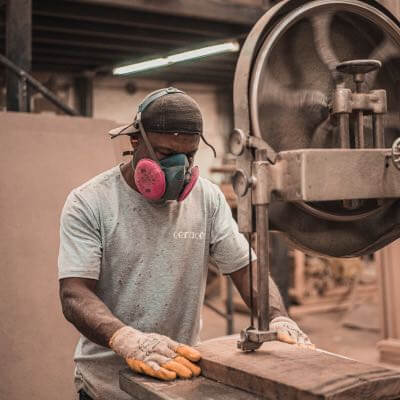
- Use a mask to avoid inhaling dust: Cement dust is harmful to human health and can cause respiratory diseases.
- Use glasses and rubber gloves: Just like traditional Portland cement, fast cement is irritant when it comes into contact with eyes and skin, therefore, it is recommended to use glasses and gloves.
- Prepare the mixture in moderate quantities: This way you will have enough time to handle and apply the material properly without risking premature hardening.
- Prepare the mixture near the workplace: This optimizes time and prevents the cement from hardening before being applied.
Fast-setting cement to repair concrete floors
Rapid-setting cement is ideal for carrying out repairs on this type of surface.
Within the industrial sector, concrete floors must be kept in perfect condition to not jeopardize the facility’s productivity. Therefore, adequate maintenance is required regularly.
In the case of minor cracks or fissures, fast-setting cement can be used, minimising downtime in the working environment while delivering optimal results.
One effective way to maximise the service life of industrial floors and permanently eliminate surface damage is through the BECOSAN® treatment system. This solution addresses moisture-related issues, prevents dusting, and provides a flawless aesthetic finish, ensuring optimal conditions for all types of industrial warehouses.